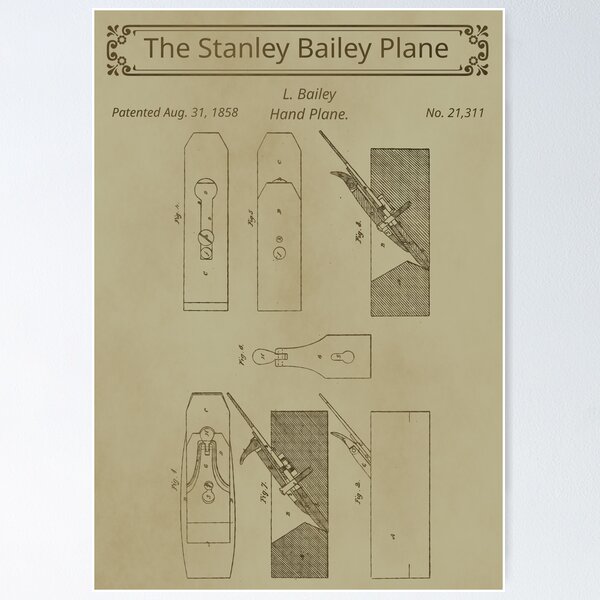
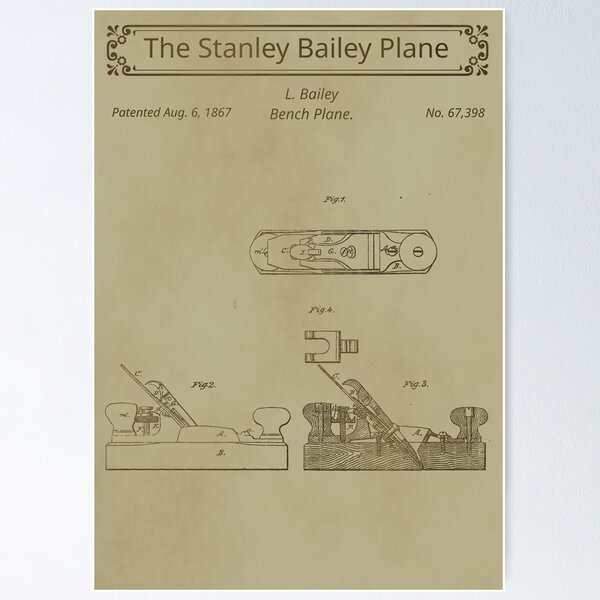
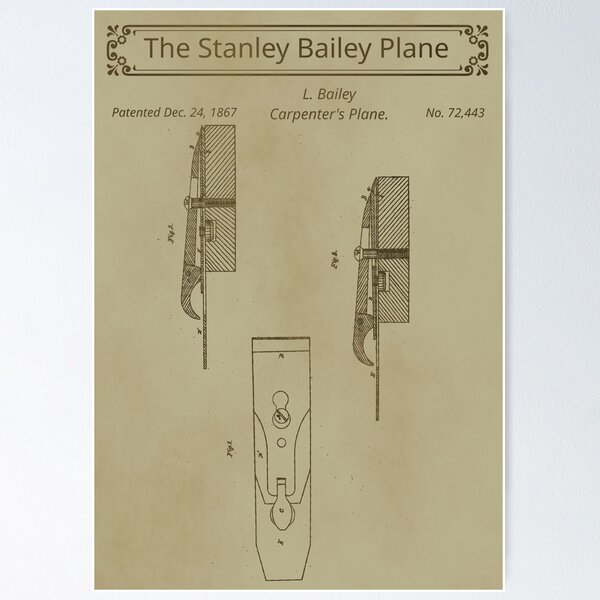
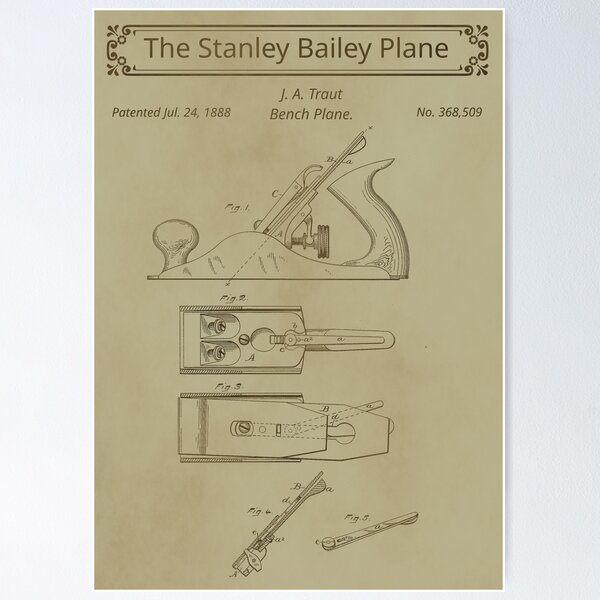
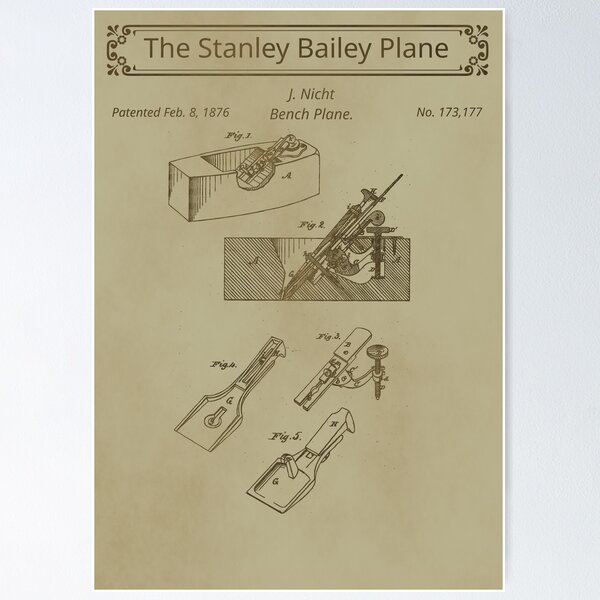
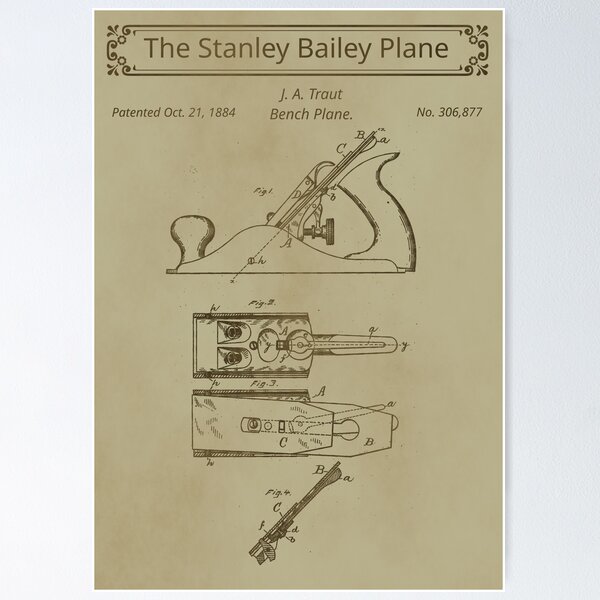
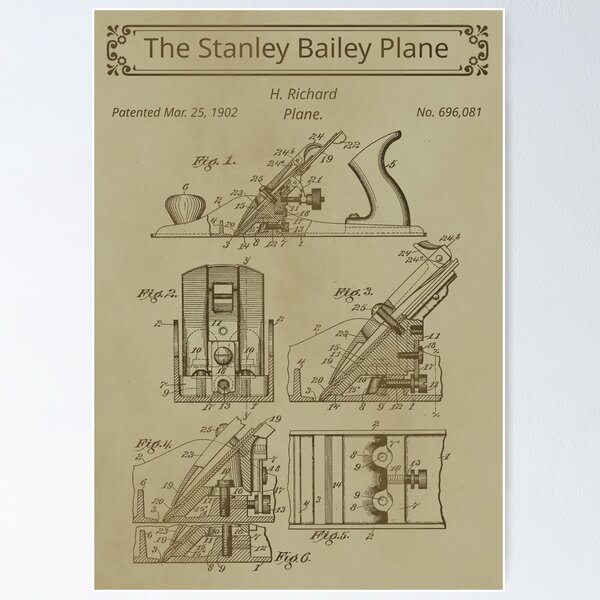
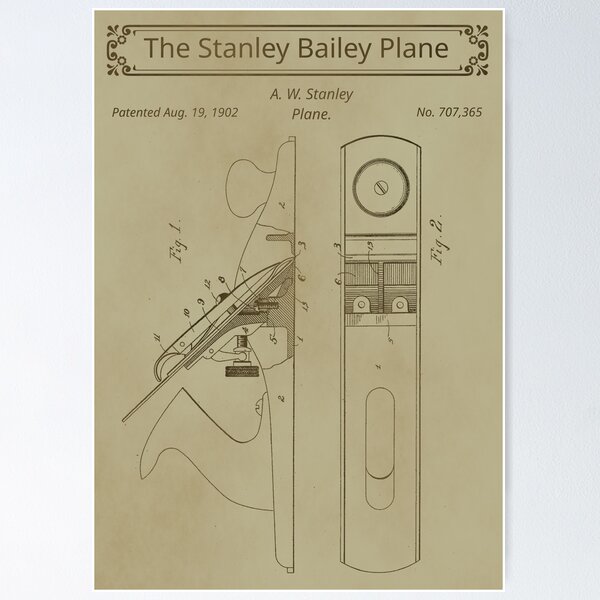
When we talk about the evolution of woodworking tools, few partnerships have been as influential as that between Stanley Rule & Level Company and Leonard Bailey. The year 1869 marked a watershed moment in tool-making history when Stanley purchased Bailey’s patents and machinery, setting the stage for what would become the standard in plane manufacturing for generations to come [1].
Early Stanley-Bailey planes proudly bore the mark “BAILEY’S PATENT” along with their respective patent dates [2]. These markings weren’t merely branding—they became crucial identifiers that today help collectors and woodworking enthusiasts date and authenticate vintage planes.
The partnership wasn’t without its dramatic moments. The company found itself embroiled in patent disputes, notably squaring off against Ohio Tool Company over hex-shaped irons [4]. Such legal battles highlighted the competitive nature of tool manufacturing during this period and the value placed on innovation.
As the years progressed, Stanley continued to refine and improve upon Bailey’s original patents. The company’s evolution culminated in 1935 when they streamlined their identity, reorganizing simply as Stanley Tool [3]. Yet even through this transformation, they maintained Bailey’s legacy, recognizing the enduring value of his contributions to plane design.
The impact of these patents extends far beyond their time. The Bailey pattern became the blueprint for bench planes, setting a standard that woodworkers still rely on today. When you pick up a modern hand plane, chances are you’re holding a tool that owes its design heritage to those revolutionary Stanley-Bailey patents of the nineteenth century.
Here is the list of all the patents used on the Stanley Bailey planes [5]:
- Found on depth adjuster nut:
- Found on cap iron:
- No. 72,443, Dec. 24, 1867 – Cap iron design.
- Found on lateral adjustment lever:
- Found on blade:
- No. 473,087, April 19, 1892 – Changing the slot so the screw head passage hole is at the bottom near the blade’s edge.
- Found on plane base:
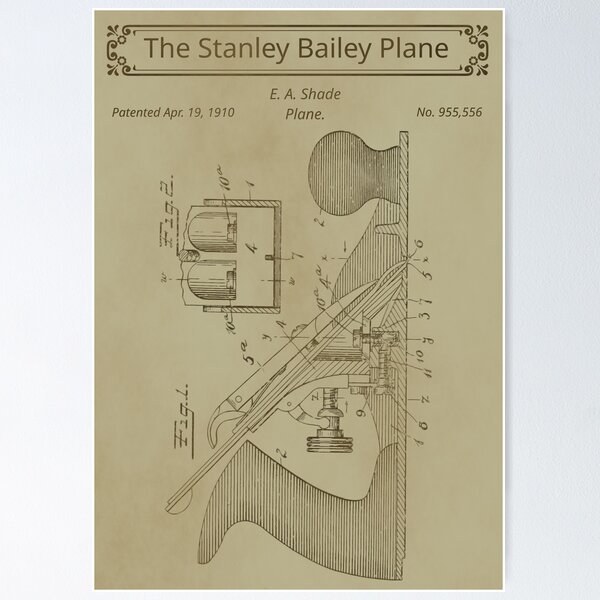
For enthusiasts and collectors alike, we’re excited to offer a unique way to celebrate this rich history. Our exclusive collection of artworks brings these groundbreaking patents to life through carefully crafted vintage-style illustrations. Each piece is printed with an aged-paper effect, capturing the authentic feel of the original patent drawings. From the iconic Bailey No. 5 jack plane to the intricate adjustment mechanisms that revolutionized woodworking, these museum-quality prints make stunning additions to any workshop or home office. Available in various sizes, from intimate desk prints to statement workshop posters, each piece tells a story of innovation that shaped the craft we know today.
In the world of woodworking tools, few collaborations have left such an indelible mark as the Stanley-Bailey partnership. Their patents didn’t just improve existing tools—they fundamentally transformed how craftsmen would work with wood for generations to come.
 Ch'Gans random bits and bobs
Leave a comment